Research Task: The Wellcome Collection
- Abbie Vidler

- Mar 4, 2024
- 5 min read
For this research task, I had to explore a variety of different artists that use their love for nature to create art and to contribute to the sciences, from there I take a look into their process and how they keep up with the times of technology.
To start off, I explored the Wellcome organisation to see what they do and what they are all about.
The Wellcome organisation is all about improvement, recognizing and advocating what the world needs and researching how; the aim is to use collaborative research to improve the world and the people, all the projects are committed to help them (and us) to understand life, health and well-being-- aiming to tackling climate change, infectious diseases and mental health. 1
The company was founded by Sir Henry Wellcome who was a "pharmaceutical entrepreneur", his determination and aspirations "inspired the creation of the first leukemia drug, immune suppressants for organ transplants, and antivirals as AZT- the first drug approved to treat HIV". 2
With this in mind, you see the extent and importance that botanical illustration and the Wellcome organization is; the research that requires creativity and critical thinking is opening up the way we think of the world and the people within it; with technology though, how do artists keep up-- how do they contribute?
Angie Lewin is my first artist that I'll explore and her botanical illustrations are a great starting point for this search task, her illustrations depict heavily textured flowers/plants that flow across the page. To achieve this, she uses a variety of different mediums depending her subject or style approach, she uses wood engraving, lino-print, screen-printing and sometimes watercolour too.
With it's own techniques of materials come different outcomes, take the wood engravings as an example, the result of print has an underlying soft texture and isn't so harsh with the lines; the lino-print on the other hand, is sharp with specks of texture from the paint.
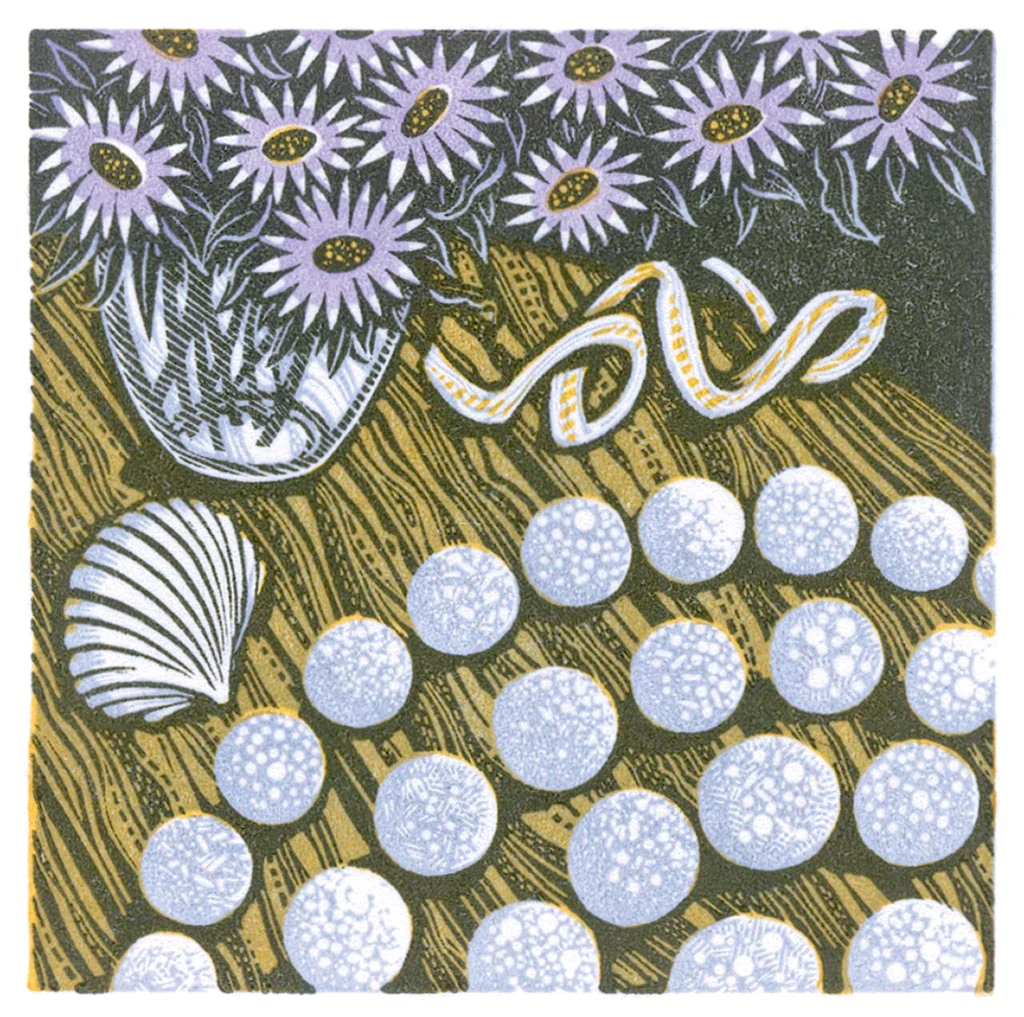
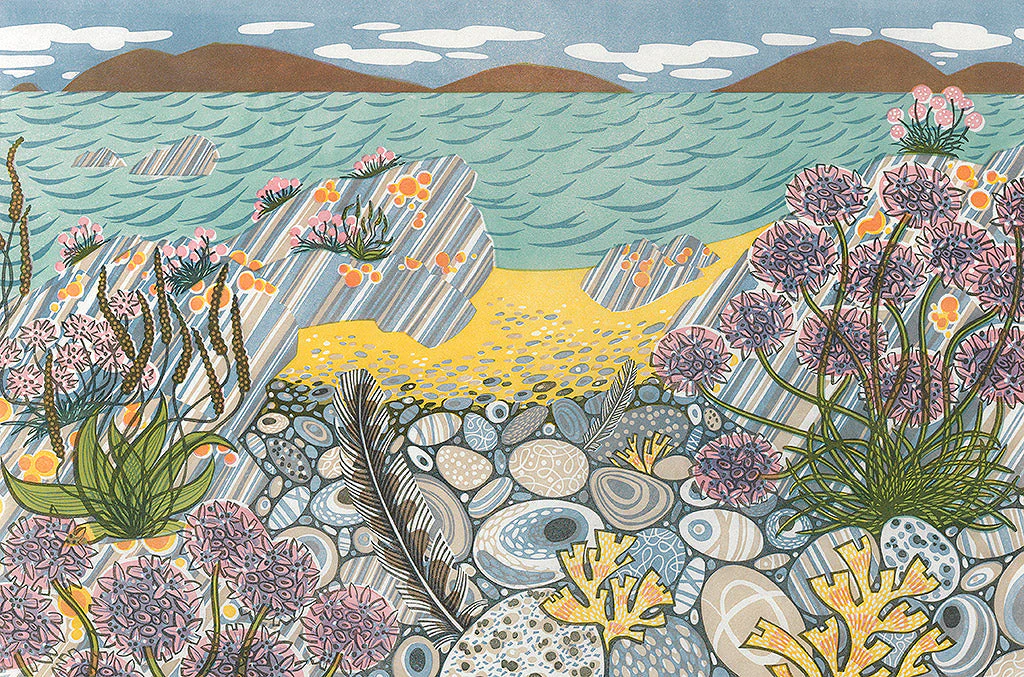
Angie Lewin's work approach to traditional image-making is to allow herself to push further than simple observation drawings, she opens herself to create flow as a creative choice- this way when she creates works that has texture, colour with line-making that goes along with nature.
With similar methods but different stylistic decisions is Hannah McVicar, Hannah creates heavily detailed illustrations that intends to show every single stem, and every single leaf, and every single petal. She doesn't shy away from bold lines and vibrant colours, and appreciates the flat look that screen-printing creates.
Hannah leaves it all up to chance with her image-making process, allowing the technical screen-printing to determine the outcome of the illustration and using vibrant colours to create her beautiful botanical illustrations. The illustrations are meticulously detailed and everything is focused

5
Something that needs to be talked about more is the lack of diversity in this area of illustration and the history behind it, when I came to researching this I found myself learn about the issues that people of colour are faced with; they are challenged with situations that white people don't encounter.
My own belief is that the world is wonderful, unique and should be celebrated-- we are all equal and important. We should appreciate and amplify the voices that have been suppressed for far too long; the beauty of acceptance is to let voices and actions be heard. When researching, I learned that the original names of all the plants and flowers we hear of today aren't original and were changed to English and Latin names, and that "many BIPOC possessed knowledge of many indigenous plants" but the information was passed to wealthy, white men that then claimed that information as their own discovery. 6
George Washington Carver loved art and wanted to pursue it, but after showing his love for nature through his art his teacher encouraged him to pursue agriculture instead. The hardworking and intelligent man would pursue as a professional agriculturist and did so as representation for black people, described as selfless- as he held back his love for art-- although that love would eventually take over. 7
Carver's work was beautifully soft, intricate and with stunning vibrancy in his paintings; his drawings were scratchy giving illusions to details with his mark-making. His beautiful drawings would contribute to the improvement of horticulturists and botanists, however photographic printing came into the picture and eventually became mass produced for curriculum. Fortunately, his work would continue as he used his intricate drawings to help black farmers to change their practices to improve farming, with this helping and encouraging healthy eating to "poor farm families" and boost the production of "marketable products". 8

Lithograph, "Plumcots, Samples of a Distinct New Species of Fruit Produced by Luther Burbank" 1909 8
Another incredible artist I researched was Sibonelo Chiliza, Chiliza got into botanical illustration when his mentor noticed his talent during a Durban Botanical Garden textile project; from there he did many internships- working up and landing him a job with the African Plants Initiative.
Chiliza's work is breathtaking, it's soft and vibrant, it's so delicate that you'd be so scared to break it by looking too hard; he achieves with Lyran pencils and draws entirely from life with a "maths divider". The light shading effect creates a soft texture and with the oil-based coloured pencils provides that vibrancy we see; from there it goes through the lithograph process that enhances that soft look. 9

Phalaenopsis Anna-Larati Soekardi, Sibonelo Chiliza 9
Reflection
This research task was a lot, the amount of history involved with botanical illustration got me a little overwhelmed but I feel like it was so important for me to learn about what the issues are with art and botanical illustration-- unintended for this research task since I was meant to look into how artist have had to adapt with the rise of technology.
Looking back, I see that there is a lot of struggle with staying "relevant" with botanical illustration since technology is so easily accessible-- saying that sentence makes me reflect on how I feel as AI art becomes much more popular and in use, it's a threat that no one can stop since it's easy for people to do themselves and they don't have to hire someone to produce an image. It's all so easily passed off as art now. But what people don't realise is that people craft every single thing in their artwork and the process itself is art, and it's what they do to make them happy and to do as a living.
There are many beautiful artists, my favourite being Sibonelo Chiliza, his work is captivating and detailed with lots of soft shading.
Going forward into my next exercise, I feel like I may try a different technique to produce an illustration, maybe go back to charcoal since I produce fluid sketches with that. Or oil pastels since that has a lot of vibrancy. I'll play a bit before the exercise to try and figure it out-- but I'm really looking forward to it!
1 U/A, Wellcome 'What we do', U/A. https://wellcome.org/what-we-do Accessed Mar 3, 2024.
2 U/A, Wellcome 'Who we are', U/A. https://wellcome.org/who-we-are Accessed Mar 3, 2024.
3 U/A, Angie Lewin 'Pebble Spiral', U/A https://www.angielewin.co.uk/collections/limited-edition-prints/products/pebble-spiral Accessed Mar 3, 2024.
4 U/A, Angie Lewin 'Pebble Shore', U/A. https://www.angielewin.co.uk/collections/limited-edition-prints/products/pebble-shore Accessed Mar 3, 2024.
5 U/A, HannahMcVicar 'illustration', U/A. https://www.hannahmcvicar.com/illustration Accessed Mar 4, 2024.
6 E Lipson & the Draw Botanical Team, Draw Botanical 'Decolonizing Botanical Art', Feb 21, 2022. https://drawbotanical.com/decolonizing-botanical-art/ Accessed Mar 4, 2024
7 U/A, National Park Service 'George Washington Carver - The Artist: Yucca and Cactus', U/A. https://www.nps.gov/teachers/classrooms/george-washington-carver-the-artist-yucca-and-cactus.htm#:~:text=Carver's%20painting%2C%20Yucca%20and%20Cactus,discovering%20his%20love%20of%20plants. Accessed Mar 4, 2024.
8 U/A, The Henry Ford 'What if an artist becomes a Scientist', U/A. https://www.thehenryford.org/explore/stories-of-innovation/what-if/george-washington-carver Accessed Mar 4, 2024.
9 U/A, The Artists' Press 'Sibonelo Chiliza', U/A. https://www.artprintsa.com/sibonelo-chiliza.html Accessed Mar 4, 2024.
Comments